


Push-open drain
A push-open drain mechanism is a modern alternative to the classic pop-up drain in a sink or vanity. Instead of a pull lever, the drain is opened and closed by pressing the stopper. This technology is particularly popular in modern bathrooms because it combines functionality, convenience, and minimalist design.
What is a push-open drain assembly?
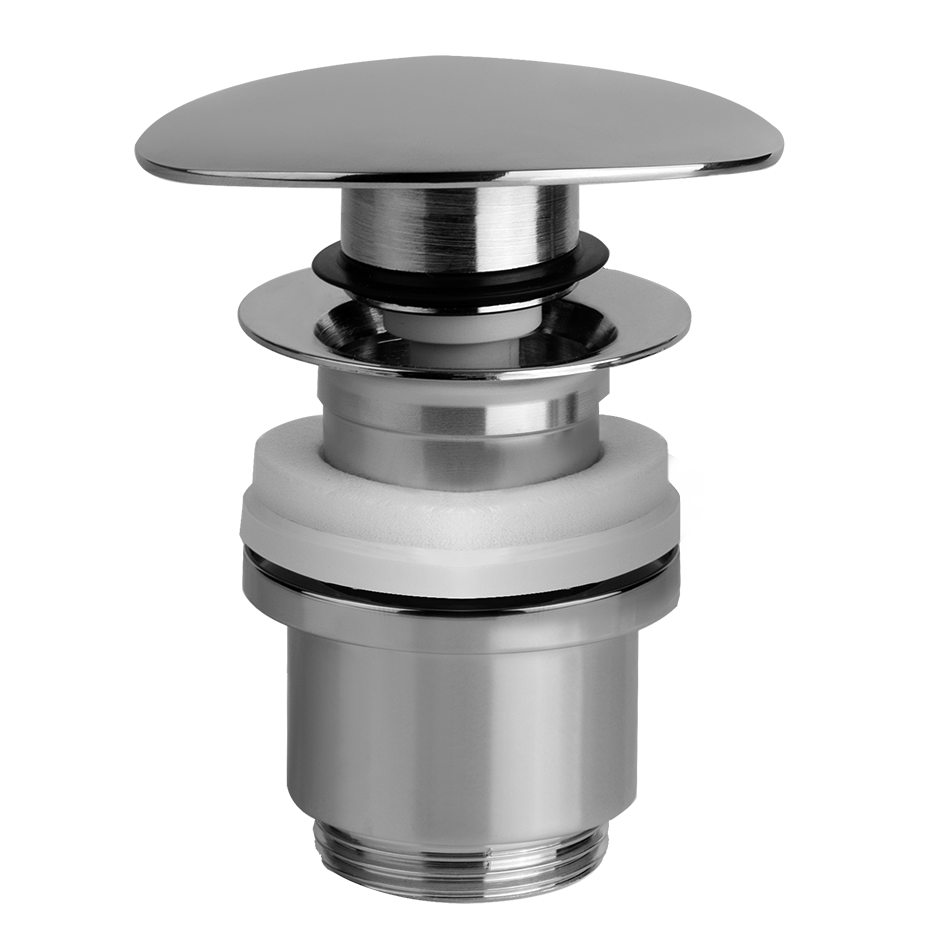
A push-open drain (also called a push-up valve) is a mechanical drain closure that is operated by light pressure:
- Press once -> drain closes
- Press again -> drain opens
The mechanism works entirely without a pull rod or lever and is integrated directly into the drain valve.

Applications
Push-open drain mechanisms are primarily used in washbasins, countertop basins, bathtubs, and modern designer bathrooms, especially where there is no space for a pop-up waste or lever. They ensure a clean, uncluttered look, as no additional controls are visible.
Typical applications at a glance:
- Washbasins and vanity units
- Countertop washbasins
- Bathtubs (in special designs)
- Shower trays
- Designer bathrooms without visible controls
Push-open drains are standard, especially for countertop basins, as there is often no space for a pop-up waste.


Construction and Function
The push-open drain consists of a drain body, a plug, a spring mechanism, and seals at the top and bottom. Pressing the plug lowers it and closes the drain, while pressing it again releases the locking mechanism and pushes the plug back up. This allows the water to drain.
Compared to traditional pop-up drains, no rod or lever is required, making the mechanism particularly space-saving and easy to use.
Advantages of a Push-Open Drain
A push-open drain offers several clear advantages over conventional drain mechanisms.
- First, it's exceptionally convenient to use: simply press the plug to open or close the drain without having to move a lever or pull rod. This is not only intuitive but also practical when your hands are full.
- Furthermore, the push-open drain creates a modern and minimalist design. Since no eccentric or visible lever is required, the sink and bathroom furniture appear tidy and clearly structured, which is particularly aesthetically pleasing in modern bathrooms.
- Another advantage is its space-saving design. Because no rod needs to be installed behind the sink, more space remains in the vanity unit or siphon area. This also makes cleaning and maintenance easier.
- In addition, push-open drains are low-maintenance and durable, as they have few moving parts and the mechanism functions reliably when cleaned regularly. Many models are also available with or without an overflow, increasing installation flexibility.
Installing a push-open drain
Installation is straightforward and can be completed in just a few steps. First, insert the drain into the sink opening from above, carefully positioning the gasket between the valve and the sink. Then, tighten the mounting nut from below to secure the mechanism and connect the siphon. Finally, insert the plug and test the drain's function.
Installation Tips:
- Check whether you need a model with or without an overflow.
- Models with an overflow have side openings to drain excess water.
- Tighten the mounting nut by hand, but do not overtighten.
- Ensure precise alignment to prevent malfunctions.



Care and Maintenance
Push-open drains require minimal maintenance but do need occasional cleaning. The plug can be easily removed to clean limescale or hair. Seals can also be easily replaced when worn.
Care Instructions:
- Clean the plug and mechanism regularly
- Remove limescale deposits, e.g., with mild vinegar water
- Use only recommended cleaning agents
- Replace seals as needed
Push-open drain vs. eccentric drain
Unlike classic eccentric drains, which are operated via a lever, the push-open drain offers clear advantages. Operation is directly on the plug, giving it a more modern and minimalist design. Installation is simpler, as no rod is required, and maintenance is also less complicated. Therefore, the push-open drain is particularly attractive for contemporary bathrooms where functionality and aesthetics are equally important.